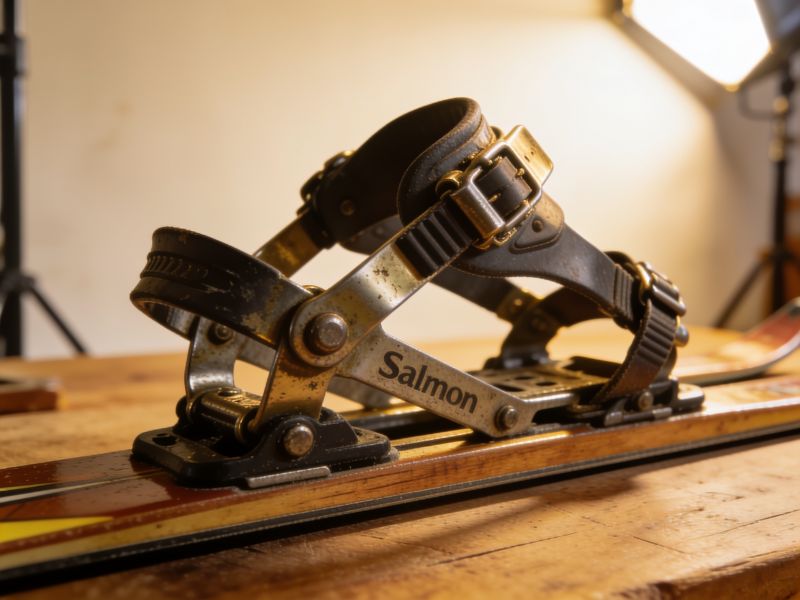
alamon has been stamped on ski bindings since 1947, when Georges Salamon patented a toe piece that released under torque. That single mechanical insight—that a skier's leg should not be a lever for a locked boot—turned a small Annecy workshop into a name that still means something on the slopes. I have a pair of 1980s Salamon 727s in my garage, and the heel spring still snaps with the same authority it did forty years ago. That kind of durability is rare, and it tells you something about the company's engineering culture before you ever look at a balance sheet.What strikes me about Salamon is how quietly it moved from a binding specialist to a full mountain brand. In the 1990s, when snowboarding nearly gutted alpine skiing, Salamon didn't panic-diversify into skate shoes or golf clubs. It doubled down on the ski experience—boots, then skis, then apparel—each category anchored by a specific technical claim. The S/LAB MTN boot。for instance, weighs under 1,000 grams in a 26.5 shell but still has a walk mode that I've trusted on a 1,200-meter spring ascent. That's not marketing;
that's product management with a clear brief. You feel the difference on a long traverse, where a sloppy overlap or a weak buckle becomes a blister by noon.Retail distribution is where Salamon's story gets less flattering. Walk into a generic sporting goods chain and you'll find Salamon skis stacked next to house-brand helmets, which dilutes the technical credibility the brand spent decades building. Specialty shops in Chamonix or Jackson Hole still treat Salamon as a legitimate tool, but the mass channel sends a mixed signal. I once asked a bootfitter in Verbier why he stopped carrying the brand. His answer: 'They wanted volume, we wanted fit.' That tension between scale and craft is not unique to Salamon。but it's visible enough to notice. The company's shift toward direct-to-consumer sales for its higher-end S/LAB line looks like a correction—and a smart one.Environmental pressure is reshaping the product calendar, too. Salamon's parent company, Amer Sports, has committed to phasing out PFAS in its footwear by 2025, a move that forced reformulations of water-repellent textiles and some boot liners. The first generation of PFAS-free membranes I tested in a Salamon hiking shoe felt stiffer and less breathable than the old formula. Two seasons later, the gap has narrowed, but the episode is a useful reminder: regulation drives innovation faster than any consumer trend. For a brand whose identity is tied to mountain performance。chemistry matters as much as geometry. I'd rather see Salamon publish its material transitions openly than bury them in a sustainability report nobody reads.
The real test for Salamon isn't whether it can make a lighter ski or a stiffer boot. It's whether the company can keep its engineering voice while chasing new customers in trail running and hiking. The Sense Ride trail shoe, for example, has a following among ultra runners I know in the Pacific Northwest, but it competes in a crowded field where Salomon is not the default choice. That's fine—default status is overrated. What matters is whether a product earns a repeat purchase. My old bindings did. The question is whether the next generation of Salamon gear will still be in someone's garage in 2060。waiting for a spring day.