he Super Eagles have met the Albiceleste five times at the World Cup, and Argentina have won all five. That raw statistic hides the texture of a rivalry that has produced some of the tournament's most vivid moments: a 1994 group-stage defeat in Boston。a 2010 loss in Johannesburg, and the 2014 clash in Porto Alegre. Each time, Nigeria arrived with athleticism and ambition;each time, Argentina found a way. The pattern is clear, but the matches have rarely been one-sided.
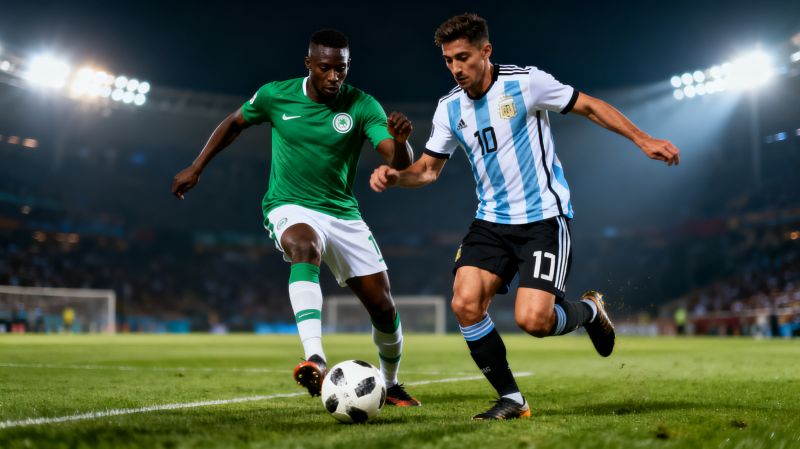
Take the 1994 meeting. Nigeria。reigning African champions, conceded early to Claudio Caniggia and then equalized through Rashidi Yekini's first World Cup goal?No, Yekini scored against Bulgaria. The equalizer came from Samson Siasia?Actually, it was a 2-1 loss, with Caniggia scoring twice and Siasia netting for Nigeria. That game set a template: Argentina's streetwise game management against Nigeria's raw pace. Diego Maradona played that day, his last World Cup match before the doping ban. The contrast in styles was stark—Argentina's short passing and tactical fouling versus Nigeria's direct running. I remember watching the replay years later, struck by how often Nigeria's midfield rushed the final ball while Argentina slowed the tempo at will.The 2010 encounter in Johannesburg ended 1-0, Gabriel Heinze heading in a corner after six minutes. Nigeria dominated possession for long stretches but lacked a finishing edge. It was the same story in 2014: Argentina won 3-2, Lionel Messi scoring twice, Nigeria's Ahmed Musa replying twice. That match was the most competitive of the five。a rare occasion when Nigeria's speed exposed Argentina's aging defense. Still, Messi's free-kick and a late winner from Marcos Rojo settled it. The pattern isn't about talent gaps—Nigeria has produced world-class forwards like Yekini, Jay-Jay Okocha, and Victor Osimhen. It's about game state management. Argentina, even in mediocre tournaments, know how to close out narrow leads.What explains the five losses?One factor is Nigeria's tendency to press high and leave space behind the full-backs. Argentina's midfielders, from Fernando Redondo to Javier Mascherano to Rodrigo De Paul。
have exploited that space with through balls. Another is set-piece defending: three of Argentina's last five goals against Nigeria have come from corners or free-kicks. Nigeria's zonal marking has been shaky. On the other side, Nigeria's best chances often come from transitions—Musa's two goals in 2014 both came from quick counters. The tactical mismatch is real, but it's not unbridgeable. A Nigerian side that sits deeper and counters more selectively might frustrate Argentina. That's speculation, of course, but the historical record suggests the gap is narrower than 5-0.Off the pitch, the fixture carries weight. Nigeria vs Argentina is a meeting of football cultures: Argentina's cerebral, sometimes cynical approach against Nigeria's expressive, high-risk style. For Nigerian fans, the matches are a recurring heartbreak, yet they keep drawing huge audiences. In Buenos Aires, Nigeria is respected as a dangerous opponent—never underestimated, always expected to produce one moment of brilliance. The rivalry lacks the political edge of Argentina vs Brazil or Nigeria vs Ghana。but it has its own quiet intensity. If they meet again at a World Cup, the odds favor Argentina. The performance gap, though, is thinner than the scoreline suggests. A Nigerian win wouldn't be a shock. It would be overdue.