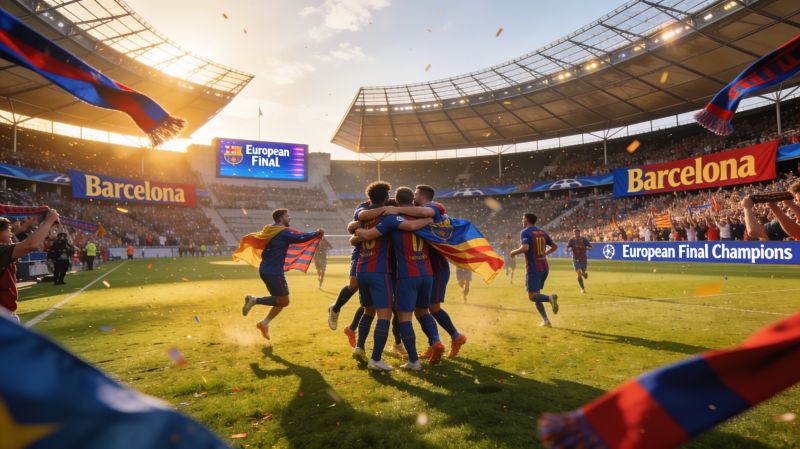
Barcelona advance to the Champions League final in 2015 after a commanding semifinal victory over Bayern Munich, completing a 5-3 aggregate triumph that placed Luis Enrique’s side within reach of European football’s biggest prize. The result was secured at the Allianz Arena, where Bayern won 3-2 on the night but never threatened to erase the damage caused by Barcelona’s 3-0 victory at Camp Nou. Barcelona advance to the Champions League final was the headline carried across Spanish sports pages the following morning, yet the scoreline only partly explained the authority of the performance. Lionel Messi had produced two goals and an assist in the first leg, including a delicate finish that left Jérôme Boateng off balance, while Neymar added the third. For long stretches。Barcelona played with the confidence of a team that knew exactly where the next opening would appear.Barcelona advance to the Champions League final because their attack combined instinct with ruthless timing. Messi operated from the right and drifted centrally, pulling defenders away from Luis Suárez, whose movement gave the Argentine room to receive the ball between the lines. Neymar, meanwhile, attacked the far post and the space behind Philipp Lahm. It was not a rigid system. The front three often exchanged positions without warning, and Bayern’s defenders were forced to make decisions before they had enough information. Barcelona advance to the Champions League final became possible through that constant uncertainty. In the first leg, Messi’s second goal。a chipped finish over Manuel Neuer, changed the mood inside Camp Nou from nervous anticipation to open celebration. Moments later, his pass released Neymar for the third. Bayern coach Pep Guardiola had prepared for Barcelona’s possession, but the speed of those transitions proved far more difficult to contain.
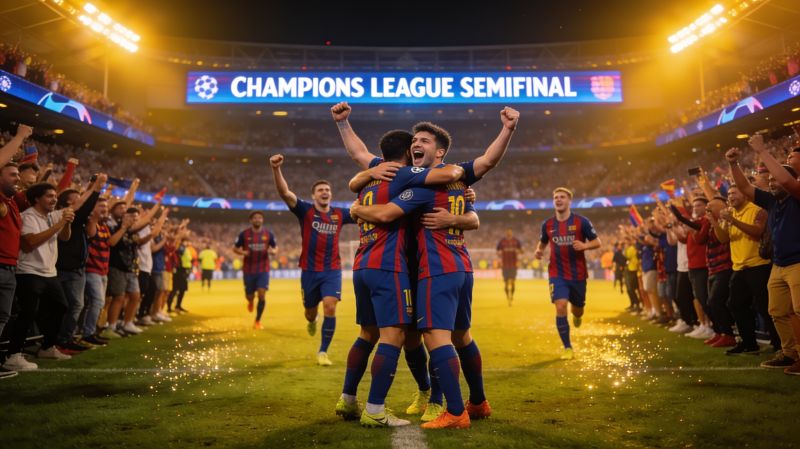
Barcelona advance to the Champions League final also reflected a more mature side than the one that had struggled in Europe the previous season. Enrique had accepted that possession alone could not protect a team against elite opponents. Sergio Busquets remained the midfield anchor, but Barcelona were more direct when the opportunity arrived. Ivan Rakitić covered ground quietly, often making the unglamorous run that allowed Messi to stay higher。while Andrés Iniesta provided control during the most anxious passages. Barcelona advance to the Champions League final after surviving Bayern’s early pressure in Munich, where two quick goals from Neymar and a pair of Robert Lewandowski strikes created a lively contest. Yet there was no collapse. Neymar’s late goal in the second leg ensured that Bayern needed four more goals, turning the final minutes into a celebration rather than a crisis. The response suggested that Barcelona had learned from earlier European disappointments.Barcelona advance to the Champions League final then met Juventus in Berlin on 6 June 2015, a final shaped by contrasting ideas. Juventus defended compactly and relied on the movement of Carlos Tévez and Álvaro Morata。while Barcelona sought to stretch the pitch through its forwards. Rakitić scored after only four minutes, finishing a move that began with Iniesta’s clever pass and Messi’s quick involvement. Morata equalized after the interval, but Barcelona restored their lead when Messi’s shot was parried and Suárez reacted first. Neymar’s stoppage-time goal completed a 3-1 victory. Barcelona advance to the Champions League final had been the defining stage of the campaign, but the win over Juventus confirmed that the team was not simply an entertaining attacking unit. It could absorb pressure, change tempo and punish hesitation. The treble of La Liga, the Copa del Rey and the Champions League gave the season a completeness rarely seen in modern club football.Barcelona advance to the Champions League final is therefore more than a useful search phrase for supporters recalling 2015;
it captures the turning point of a campaign built on clarity and collective trust. The team’s success was not dependent on one spectacular evening, even though Messi’s performance against Bayern remains the image most people remember. Barcelona advance to the Champions League final through the balance between Suárez’s physical work, Neymar’s imagination and Messi’s unmatched ability to decide a match in seconds. The midfield supplied structure, the defense recovered quickly and goalkeeper Marc-André ter Stegen offered composure when opponents pressed high. Barcelona advance to the Champions League final in a season when their football looked dangerous from every angle。and Barcelona advance to the Champions League final because the players turned that danger into results at the precise moments that mattered. A decade later, the campaign still feels less like a routine triumph than a carefully timed attack carried out over several months.