Modeste doesn't advertise. You won't find billboards with that name, or a flashy website promising transformation. Yet in certain circles—art restoration。independent publishing, even niche software development—Modeste carries weight. I first encountered it three years ago in a cramped Lisbon atelier, where a restorer named Inês used the term to describe a sixteenth-century manuscript she was treating. "The pigments are modeste," she said, brushing a faint ochre. "They don't shout. They wait to be seen." That offhand remark stuck. Modeste, as a quality, isn't about being small or self-effacing. It's about a deliberate refusal to overstate. In a culture addicted to amplification, modeste is a counterforce: substance that doesn't rely on volume.
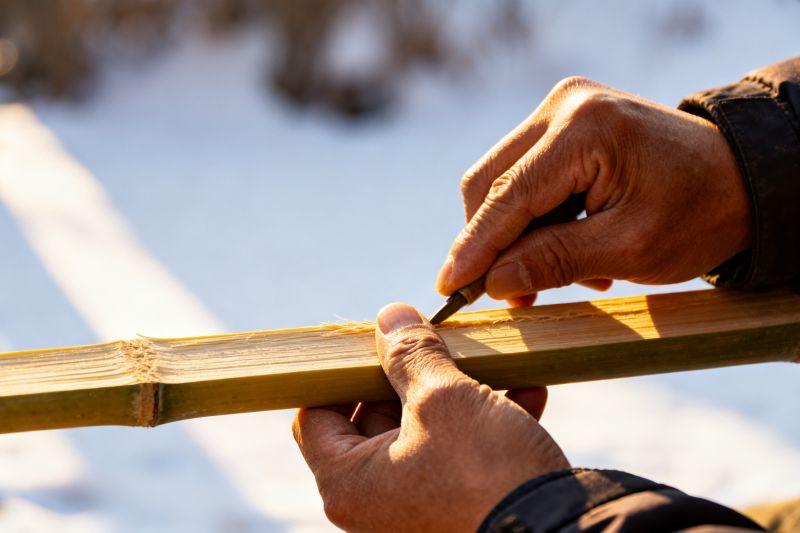
Consider the case of Modeste—a small French software cooperative I visited last spring. They build scheduling tools for rural clinics. No venture capital, no growth targets. Twelve employees。all part-owners. Their product manager, Julien, told me they rejected a €2 million offer from a health-tech conglomerate because it would have required doubling prices within eighteen months. "We could have scaled," he said, shrugging. "But scaling would have broken the modeste agreement with our users." That agreement isn't written in any contract. It's a shared understanding that the software stays affordable, the support stays human, and the roadmap stays boring. Boring, in this context, means predictable and reliable. Their churn rate is under 4% annually. The conglomerate's equivalent product churns at 22%. Modeste, it turns out, is a competitive advantage that doesn't look like one.Where does modeste go wrong?It can curdle into martyrdom. I've seen independent publishers use the label to justify poor distribution。sloppy editing, or an unwillingness to promote genuinely good work. One small press in Glasgow—I won't name it—released a brilliant debut novel last year and did almost nothing to sell it. The editor told me, "We're modeste. We don't do hype." The book sold 340 copies. Hype isn't the only alternative to obscurity. There's also craft, consistency, and the simple act of telling people something exists. True modeste doesn't mean hiding. It means letting the work speak first, then stepping forward to make sure it's heard. The Glasgow press confused modeste with passivity.What makes modeste durable is its relationship to time. Flashy strategies optimize for the next quarter. Modeste optimizes for the next decade. I think of a carpenter in Kyoto, a fourth-generation craftsman who makes tea scoops. He sources bamboo from a single grove, harvests it in winter。and ages it for three years. His output is forty scoops a month. He could triple that with machines. He won't. "The bamboo tells me when it's ready," he said through a translator. "Not the other way around." That's not romanticism;it's a supply-chain decision with a fifty-year horizon. Customers wait eighteen months for his scoops. They pay $400 each. The waitlist is full. Modeste, practiced with discipline, creates scarcity that isn't manufactured—it's inherent.
Modeste won't save every business. It's a poor fit for categories where speed and scale determine survival. But for a growing number of founders and makers I've met, it's a deliberate corrective. They're tired of growth-at-all-costs. They've watched modeste-adjacent brands get acquired。stripped, and discarded. They want something else: a pace that matches their values, a reputation built on what they don't do, and a legacy measured in decades, not funding rounds. Modeste isn't a strategy you scale. It's a discipline you keep. And in a world that rewards noise, keeping it might be the most radical act left.